Support Removal: Metal Supports Don’t Have to Be This Hard to Remove.
How SnowPod’s ultra-thin, origami-style supports evolved to stay strong during printing and release progressively during removal, with support generation built into SnowPath.
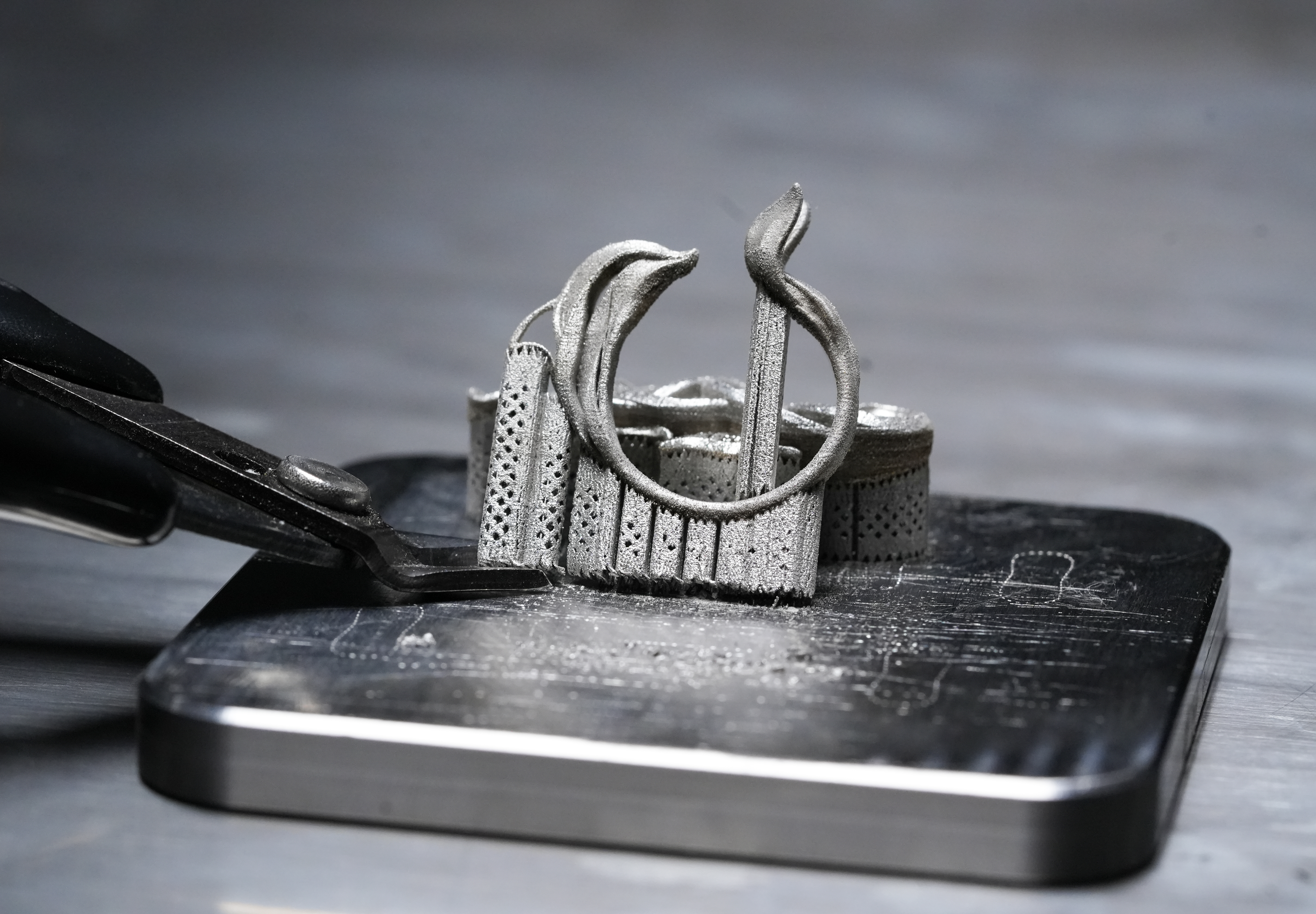
Yes, this is a metal support—and yes, it can come off this easily.
What you’re seeing is one of SnowPod’s ultra-thin metal support structures in a real test.

But here's the reality: in conventional metal 3D printing, removing supports is rarely this simple—it often takes far more work.
In industrial applications, parts may be machined off the build plate, while removing supports often involves sawing, cutting, grinding, or even an angle grinder. For individual creators and small studios, that means more tools, more space, more labor, and higher costs.
To tackle this problem in SnowPod, we first had to answer a more fundamental question: Why does metal 3D printing need supports?
1.Why L-PBF/SLM Metal Printing Needs Support

*Polymer SLS vs. Metal SLM
Among powder-bed 3D printing technologies, some, such as polymer SLS (Selective Laser Sintering), generally don't require additional supports, as the surrounding unfused powder can support the part during printing. But metal SLM (Selective Laser Melting) is a different story.
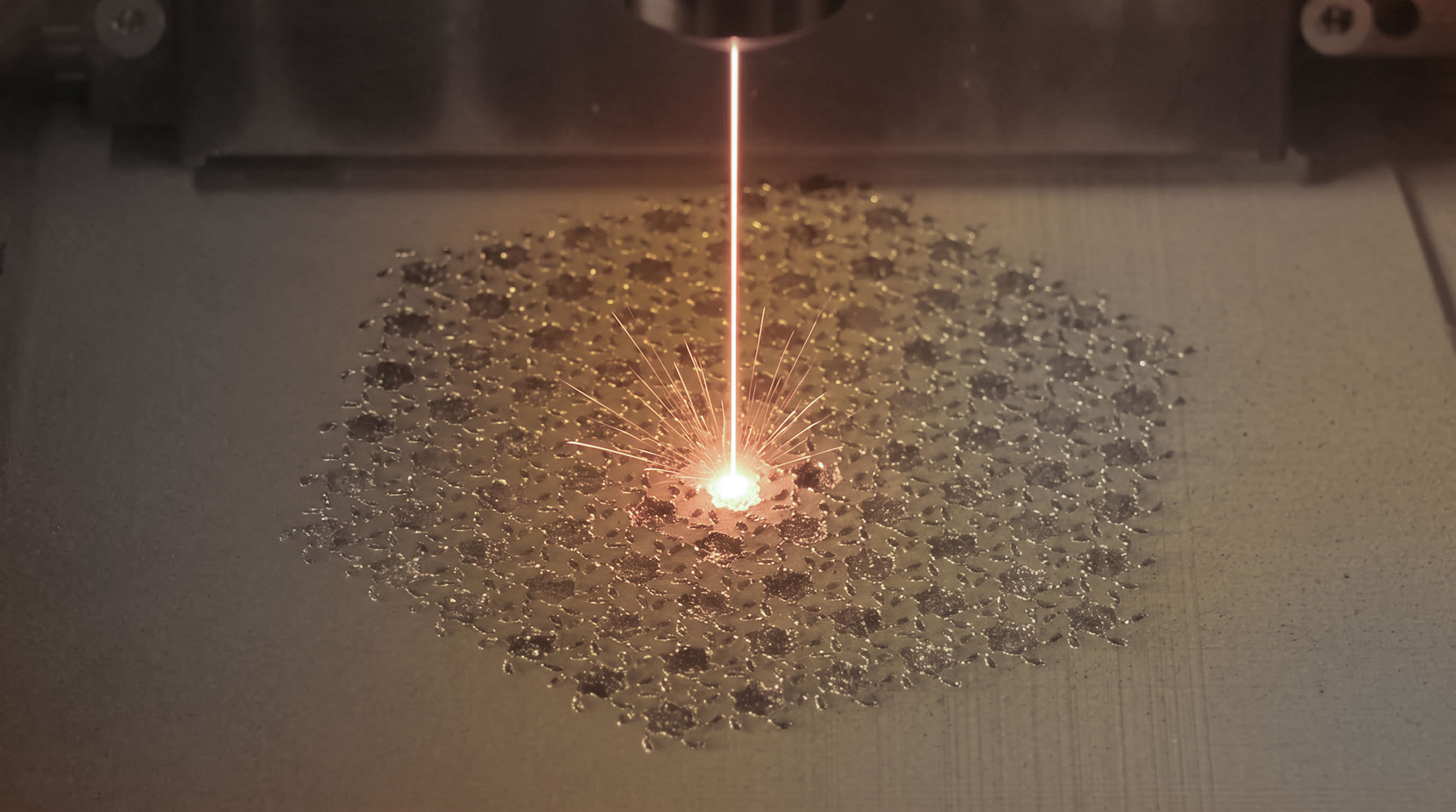
In SLM, a laser melts metal powder at extremely high temperatures. As molten metal solidifies and cools, it shrinks. Without supports holding the part in place, the shrinkage can cause the part to warp or lift from the build plate, potentially leading to print failure.
Meanwhile, the support structure also help anchor the part firmly to the build plate, support overhangs, and transfer heat.
So here's the CHALLENGE:
During printing, supports need to be strong. After printing, they need to come off.
2.How to Remove Metal Supports Easily
Our engineers began with a simple idea: If we could print such fine details, why not make the supports extremely thin—almost like metal foil?
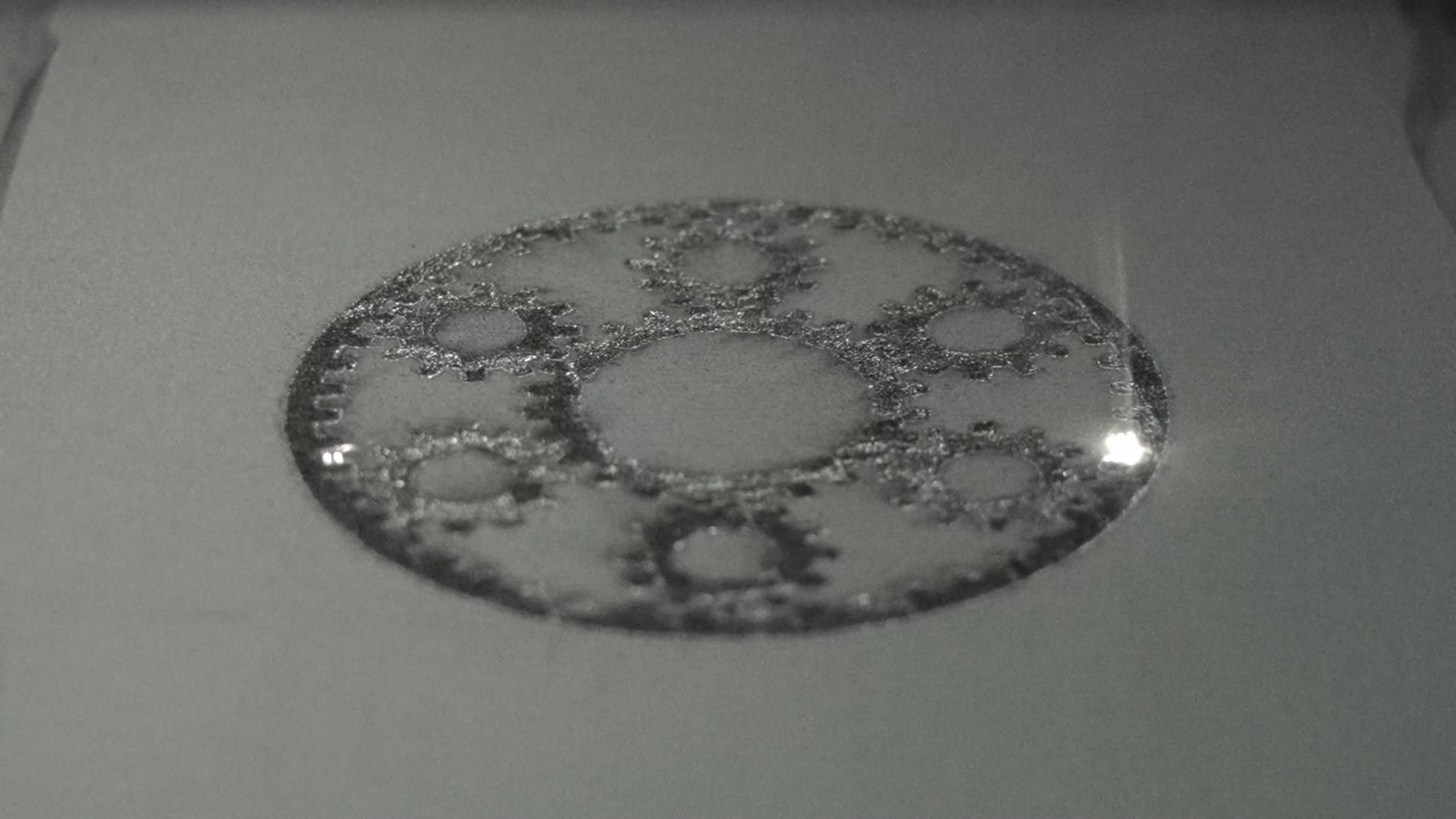
SnowPod's ~40μm laser spot gave us the ability to experiment with very thin support walls. In our tests, some support walls could be printed under 0.2mm thick.
We printed our first ultra-thin support structure, and it looked promising. We could peel it off the build plate by hand and even crush parts of it between our fingers. For a moment, we thought we'd solved the problem.

*Ultra-Thin Support Walls Printed by SnowPod
But that excitement didn't last long. When we tested these ultra-thin supports on real metal parts, we found it IMPOSSIBLE to remove the parts from the build plate.
After a closer look, we realized the real problem was how we applied the force—trying to remove the entire part at once spread the force across all the support points. No single connection experienced enough stress to exceed its fracture stress, so none broke.

*Pulling the Ultra-Thin Support from One Side
So we changed our approach. Instead of peeling the whole part off at once, we pulled at supports from one side, concentrating stress on a single support connection.
And it worked! The supports along that side came off much more easily. That raised a new question: could the supports be removed as one connection released, the force would concentrate on the next? We began exploring a way to make the supports collapse and release progressively, one after another—almost like opening a zipper.
The way these thin structures folded and collapsed reminded us of origami, so we started calling them Origami-Style Supports.
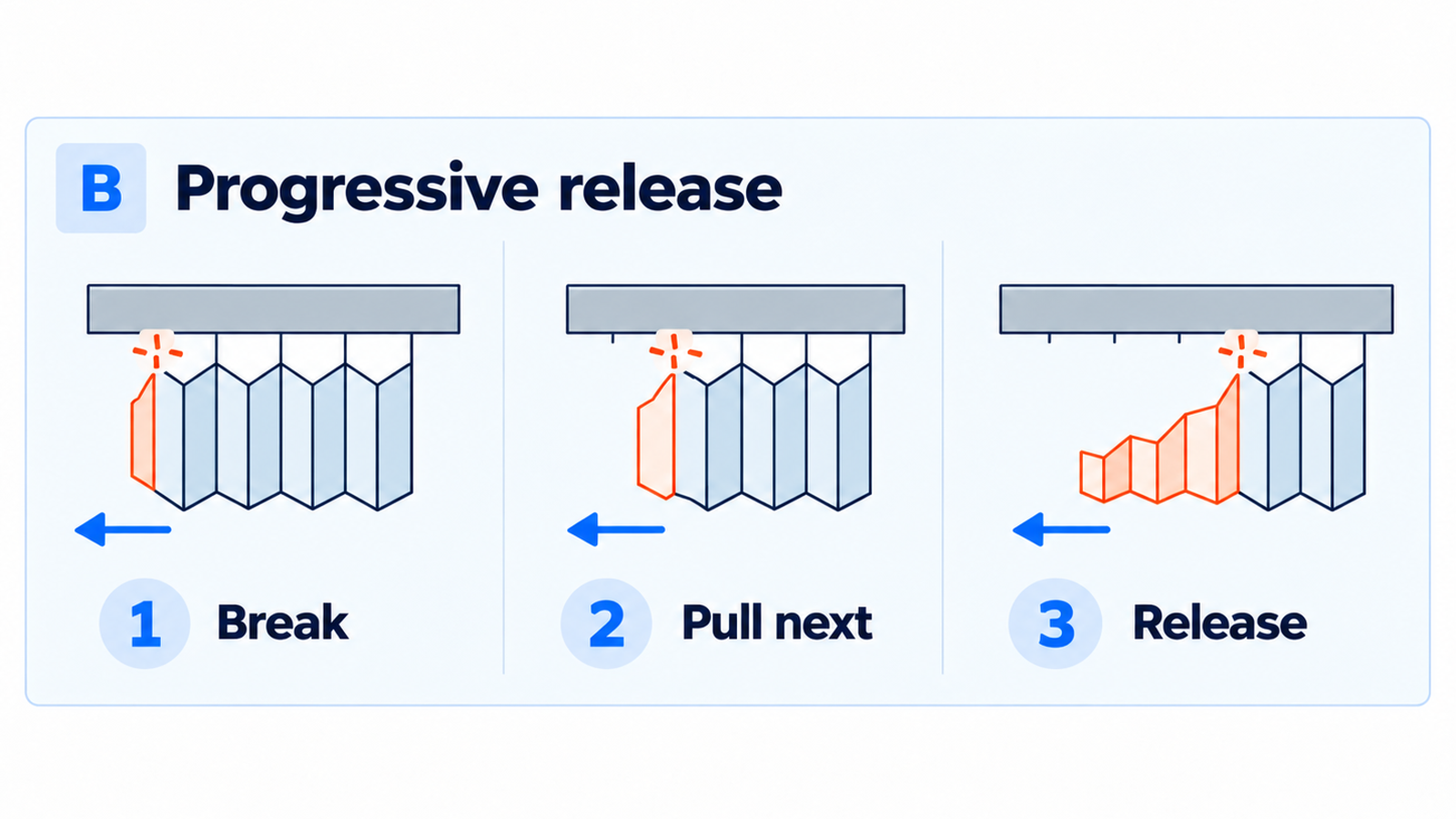
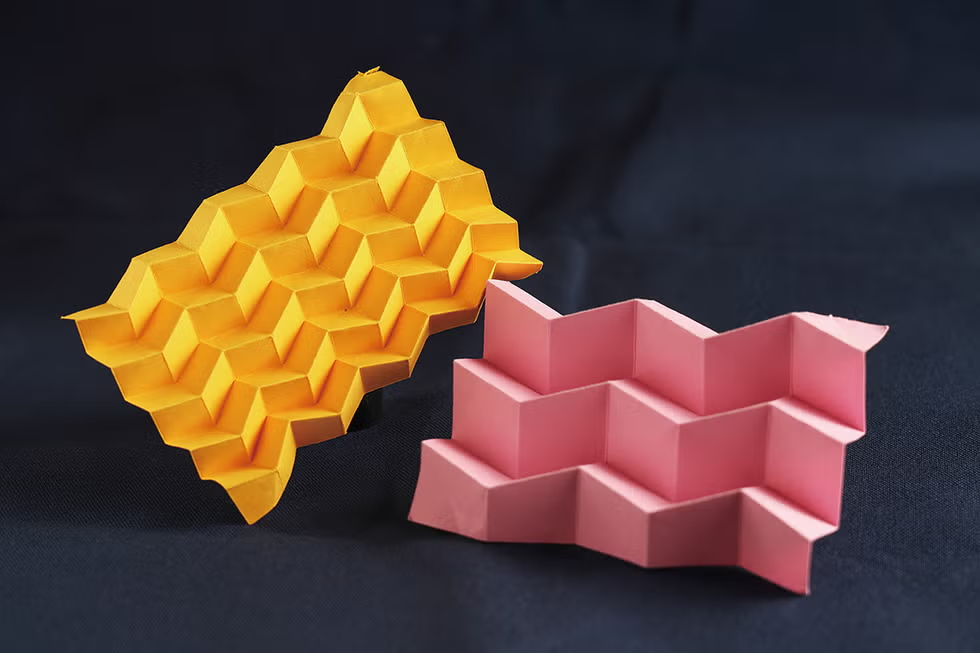
*Progressive Collapse (Left); Origami-Style Folding Paper (Right)
Later, during testing, we found that wire cutters worked especially well with this structure. Their narrow jaws concentrated pressure on a small area, causing the thin walls to buckle and the connections to release.
That gave us another idea: what if we could design supports that were strong vertically but weak sideways? The supports needed to hold the part firmly in place during printing, yet give way easily under sideways pressure during removal.
Think of a sheet of paper rolled into a tube. It can support weight from above, but collapses much more easily when squeezed from the side. That was exactly the behavior we built into our metal supports.
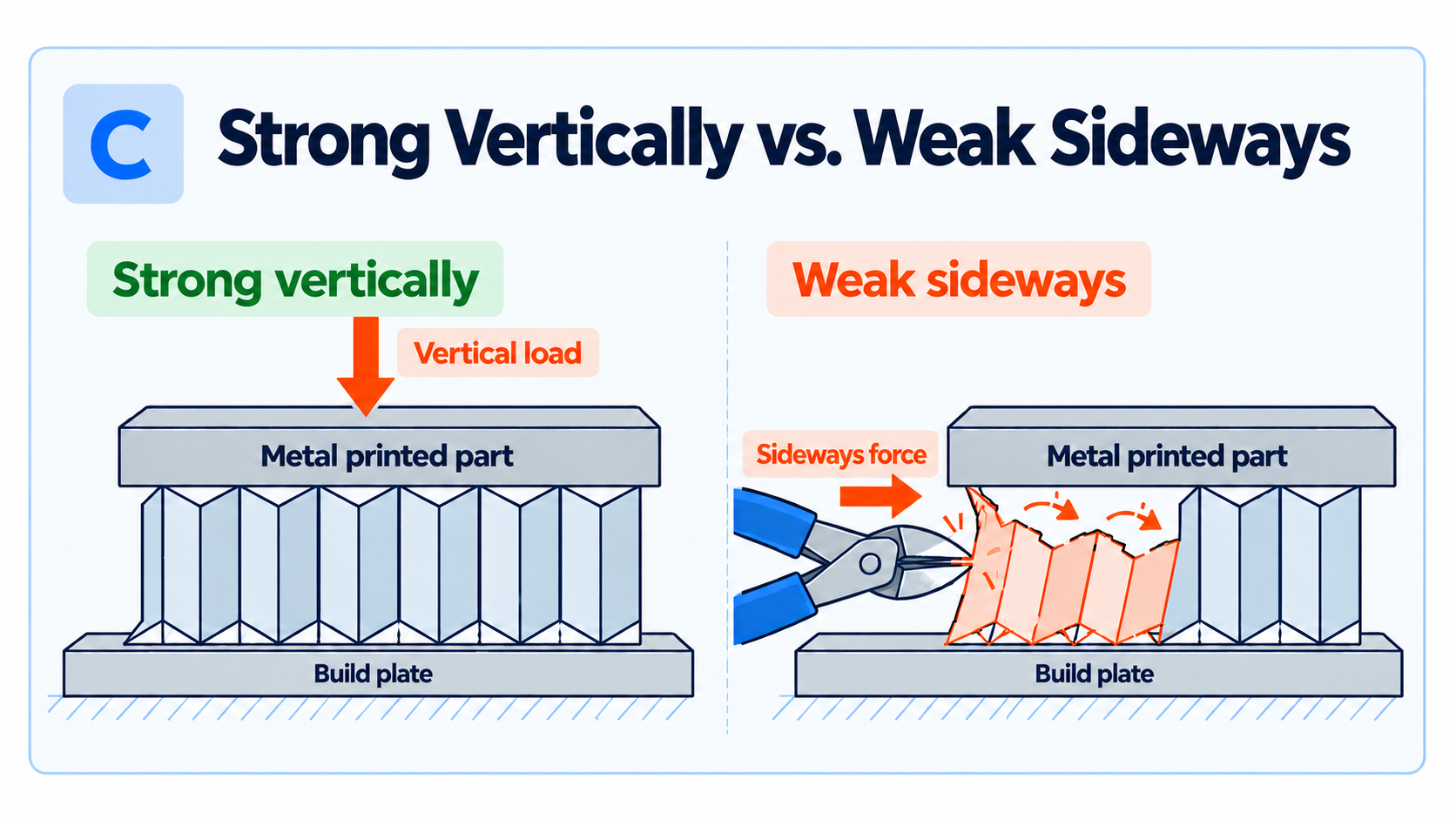
*Easier Support Removal with Wire Cutters
3.Integrated Support-Generation System, for Simple Workflow

*Automatically Generated Support in SnowPath
Our solution goes beyond the support structure itself.
In SnowPath, our metal slicing software, support structures can be automatically generated and adapted to the geometry of each model, helping balance print stability with easier removal afterward. We have built a fully integrated support-generation system, combining support structure, generation algorithms, and printing methods into one complete solution, with several related patent applications filed.
For a metal printer designed for desktops, support design matters. “Desktop” should not only describe the size of the machine—it should also mean that the workflow after printing is something an individual can realistically handle.