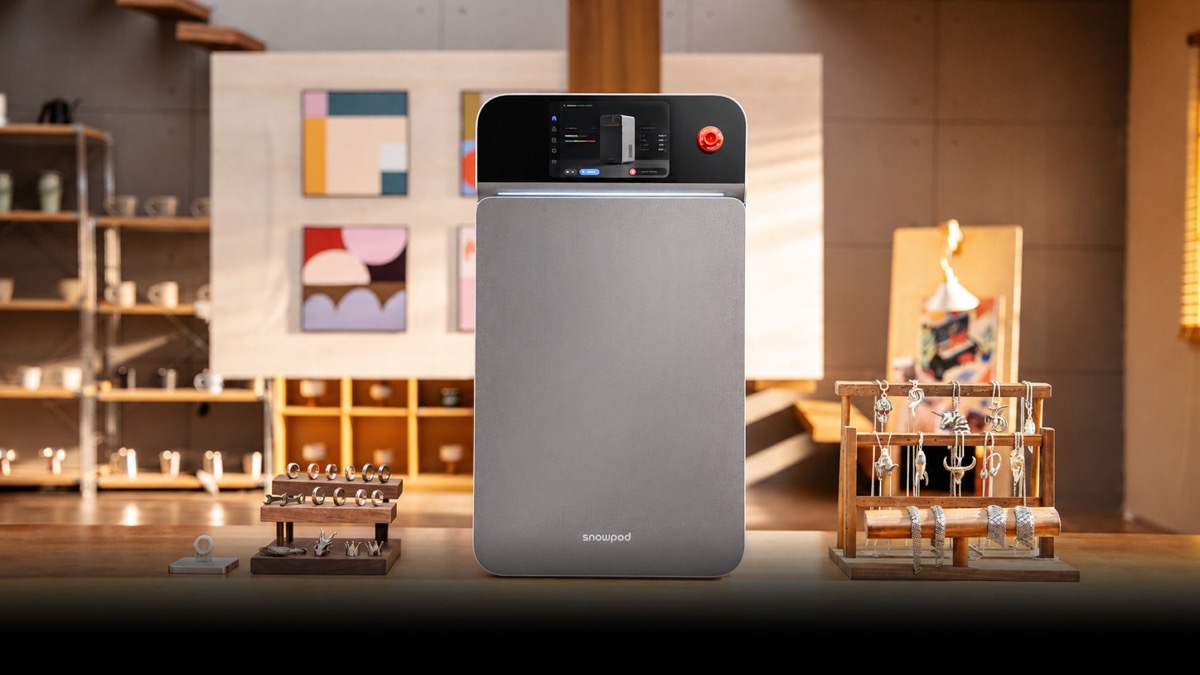
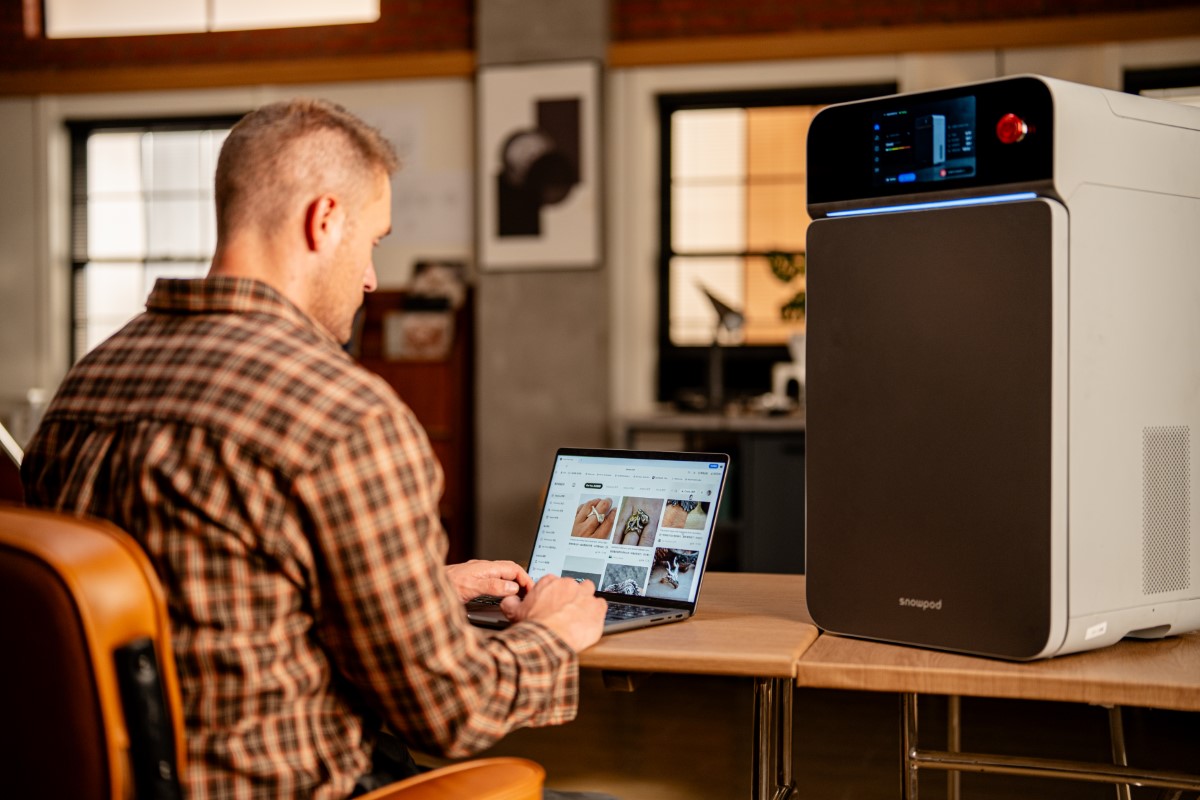
SnowX is planning to launch SnowPod, a metal L-PBF 3D printer for the desktop
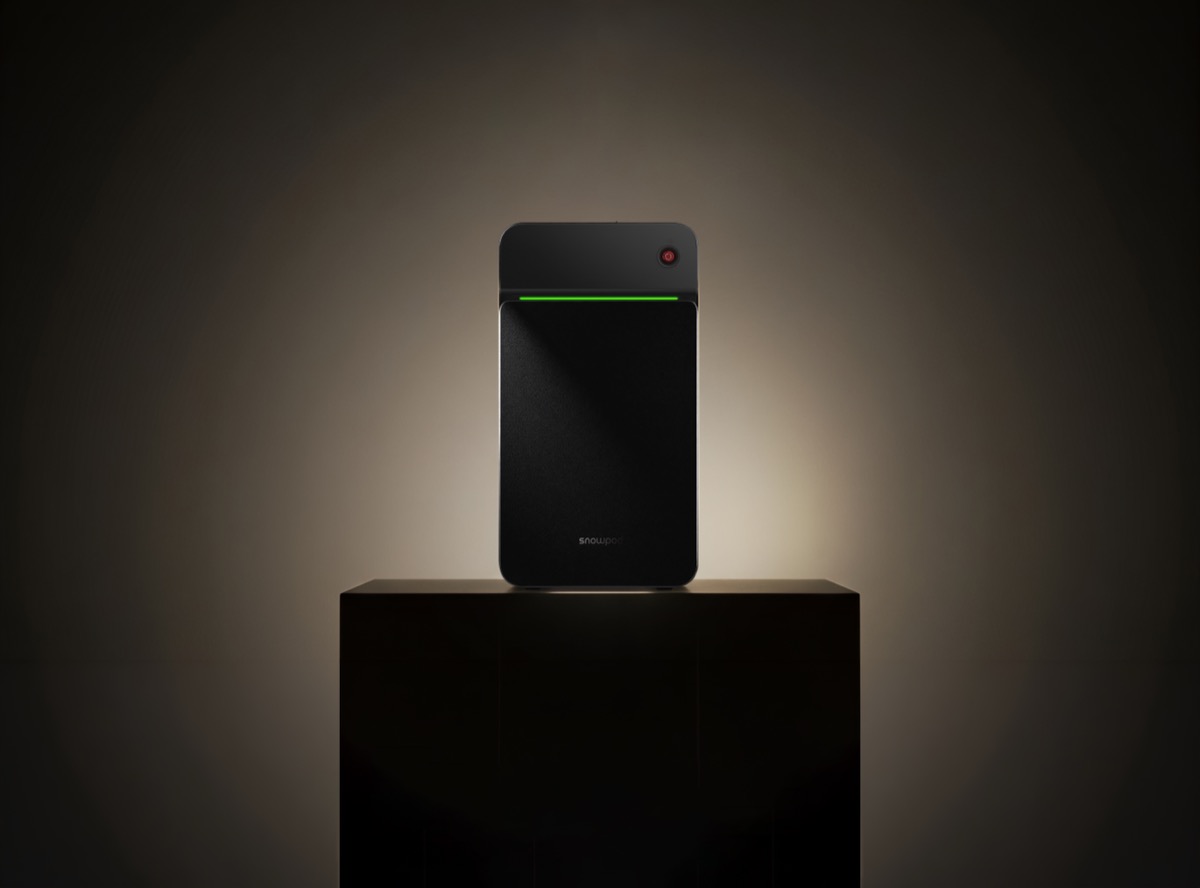
Is it too good to be true? In additive manufacturing, everything is possible, although sometimes promises, especially crowd-funded ones, don’t become reality. SnowPod, an upcoming metal 3D printer from SnowX, began appearing on social media platforms in September 2026, ahead of a planned Kickstarter launch in the fourth quarter of the year. The machine uses Selective Laser Melting (Metal L-PBF) to print in 316L stainless steel and is built into a 360 × 360 × 660 mm enclosure, a footprint smaller than some flagship FDM printers, sized to fit into studios, laboratories, offices and other workspaces. SnowX designed SnowPod around enclosed powder handling, support removal, software, air quality monitoring and material recovery as a single desktop system rather than a shrunk-down industrial machine.
VoxelMatters does not normally cover crowdfunding projects before they reach market. SnowPod is one of a small number of exceptions we made, in this case for a product that is capable of reshaping the entire metal 3D printing category and 3D printing in general. Technological development and costs may have actually reached a point where a cost-effective metal L-PBF 3D printer for the desktop is possible.
Everyday metal PBF
SnowPod combines a 40 μm laser spot, finer than a human hair, with adjustable layer thicknesses of 30 to 60 μm and 3 μm of Z-axis motion precision. Together, these are meant to reproduce fine contours, sharp edges, narrow gaps and intricate features on SnowPod’s parts, so even small metal components keep clear definition. The narrow laser spot also reduces the system’s thermal load, supporting SnowPod’s lighter, more compact build.
SnowPod offers an 80 × 80 × 100 mm build volume for metal components, jewelry, pendants, artwork, product prototypes and tools, and can fit multiple small parts into a single build. Rather than maximizing build volume, SnowX balanced SnowPod’s usable printing capacity against powder requirements, material weight and handling.
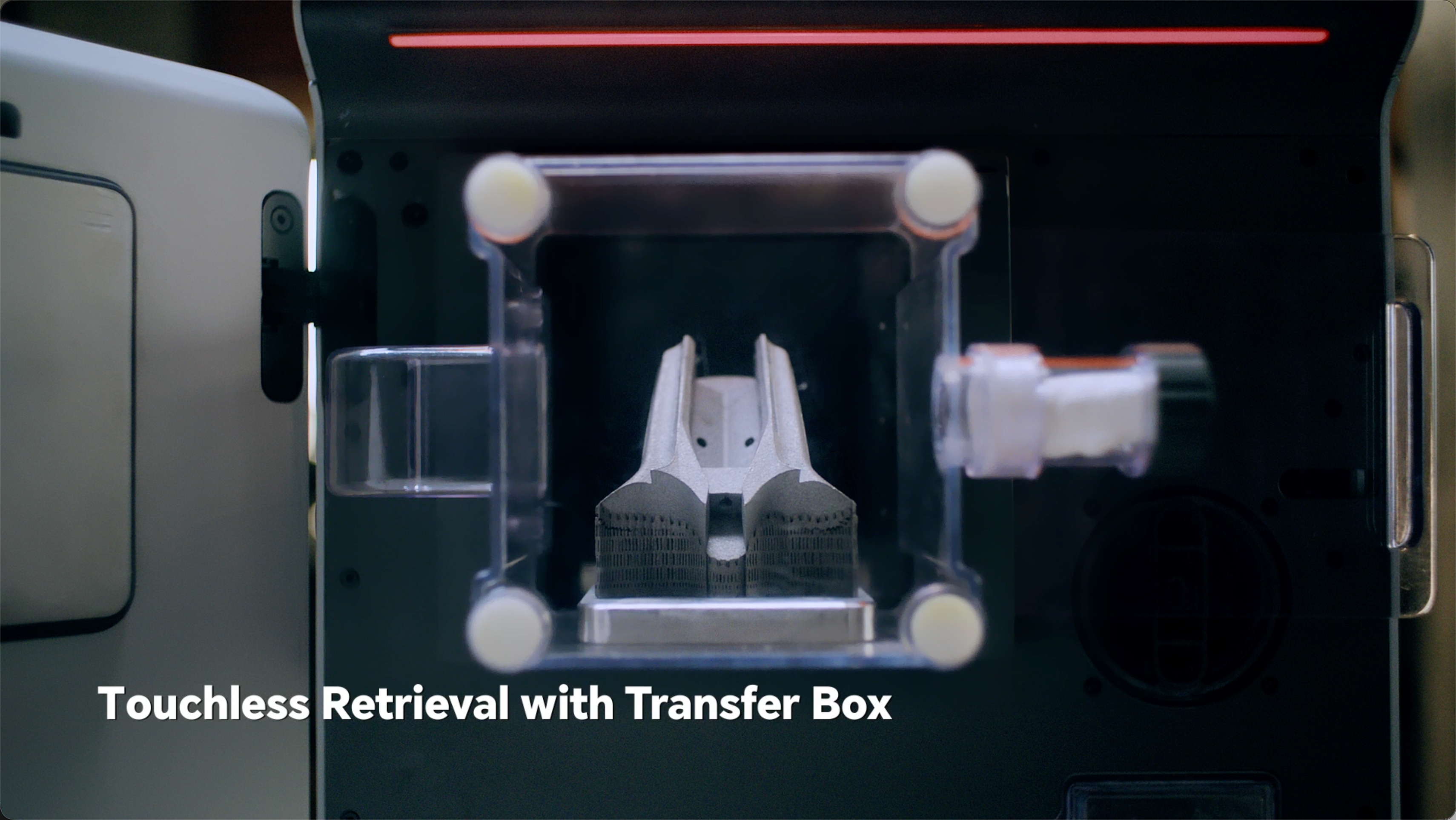
SnowPod is built around enclosed powder handling: sealed powder cartridges, an enclosed printing chamber, filtration and powder recovery work together so the machine manages most of the powder handling itself, rather than leaving it to the operator’s own precautions.

Safety first
SnowPod continuously monitors PM2.5, gas concentration, temperature and humidity throughout a print, keeping the user informed of conditions from start to finish. That monitoring feeds directly into SnowPod’s safety controls: the chamber door, filtration system and machine status are linked through multiple interlocks, and the chamber only unlocks once preset safety conditions are met.
The SLM process needs an inert gas environment to protect the metal from oxidation and keep printing conditions stable. SnowX built NitroPod, a companion nitrogen generator that separates high-purity nitrogen from ambient air, vents the oxygen and supplies the nitrogen directly to SnowPod to create the controlled atmosphere the process requires. Connecting NitroPod before a print is meant to simplify setup for regular, repeated use.
Easy post-processing
Metal PBF 3D printed parts are typically fused to their base plate and cut free with a wire EDM machine. SnowX designed SnowPod’s supports around an origami-inspired structure whose geometry, connection points and load-bearing directions are meant to stay stable during printing while breaking away progressively in the intended removal direction once the print is done. Users can start at one point and work along the structure as it separates in sequence, similar to opening a zipper.
SnowPath is SnowX’s in-house SLM slicing software and comes free with SnowPod. Once a model is imported, SnowPath handles slicing and toolpath planning, sends the job to the printer and starts the print with a single click. In addition, SnowPod uses an integrated high-definition camera and AI visual algorithms to monitor printing from the first layer onward, built to recognize issues such as lifting edges and insufficient powder delivery. The system continues to assess the build throughout the process and flag anomalies.
After the print, SnowPod automatically recovers unused, unfused metal powder for reuse, with around 90% recovery efficiency depending on part geometry. Reloading or changing material on SnowPod means opening the cover and twisting a cartridge into place, with no additional tools required.
Building a SnowX community
SnowX is backed by advanced-manufacturing company RONGSU Technology, which has worked in metal additive manufacturing, including wire-arc DED, since 2020. For the SnowPod, the company is building a community of artists and early users who share models, finished projects and ideas, giving new SnowPod owners places to find designs and inspiration for what to make in metal.
SnowX plans to launch SnowPod on Kickstarter in the fourth quarter of 2026, with pricing and campaign details to follow. The machine is aimed at one-off parts, jewelry, prototypes, models, tools and other objects, with applications ranging from mechanical and robotics components to jewelry, metal models, artwork and product prototypes. More information is available at snowx.com, with launch updates and early bird offers shared on SnowX’s LinkedIn, Instagram and Facebook accounts.
Source: VoxelMatter